

Chiaroscuro is a lighting technique initially used in classical painting. Through the contrast of light, shadows, and dark areas of the image, the volumes that make up the scene are revealed—or concealed—with greater or lesser intensity, according to their importance or prominence.
The artist creates a visual hierarchy through which they communicate with the viewers, creating contrasts, tension, harmony, and/or visual beauty. Chiaroscuro is more than just light and darkness; it’s writing with light, it’s storytelling.
Chiaroscuro is not shading
Chiaroscuro is a technique that, although it began in classical painting to bring the third dimension to the works of the time, it is also currently applied in visual arts such as drawing, photography, film, etc. Chiaroscuro should not be confused with“shading“, since chiaroscuro is much more than giving volume to objects. In fact, chiaroscuro is a technique that has a strong visual narrative component; storytelling.
Chiaroscuro, in essence, is a technique that uses light and dark to create attention. Showing the areas of most interest and leaving in the background the less significant areas of the image represented. All this in order to bring three-dimensionality to the image and make the viewer focus his attention on the details that the artist decides.
These are examples of artistic portraits that we have done in our studio and on location using the chiaroscuro technique.
We guide the viewer through the work
In reality, chiaroscuro is a perfect tool that allows us to “play” with the observer, and guide him in how he has to see and observe the work. With light, half-light and darkness, and with the intensities of one or the other, we are “telling” the eye of the observer the visual “path” to take. And in this way we control what they see, and how they see it.
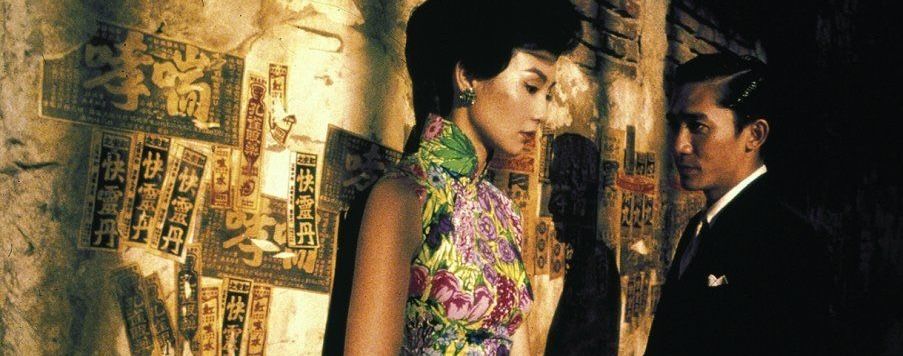
The masters of chiaroscuro
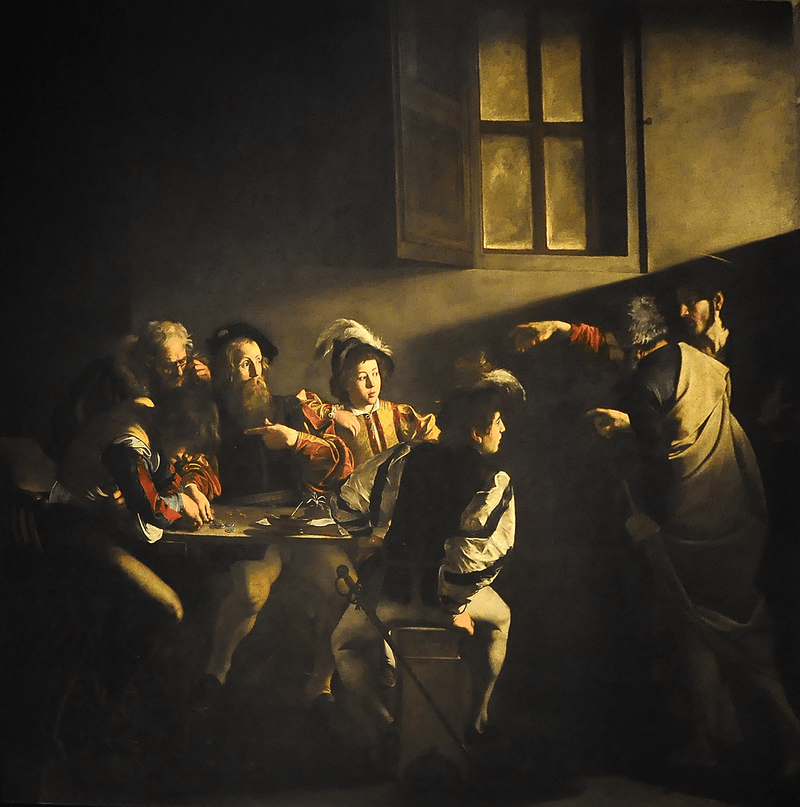
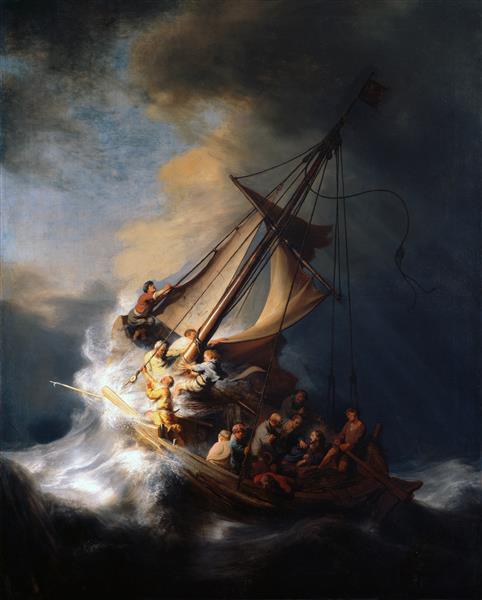
Although there could be a few standard bearers, undoubtedly the main reference of chiaroscuro, with the permission of Leonardo Da Vinci and Rembrandt, is Michelangelo Merisi da Caravaggio, better known as Caravaggio. Italian painter who was a pioneer and standard bearer in the use of this technique in his works.
We highlight “The Vocation of St. Matthew“, undoubtedly a masterpiece of visual storytelling and dramatic use of light. It is, to a large extent, the greatest influence on cinematography today.
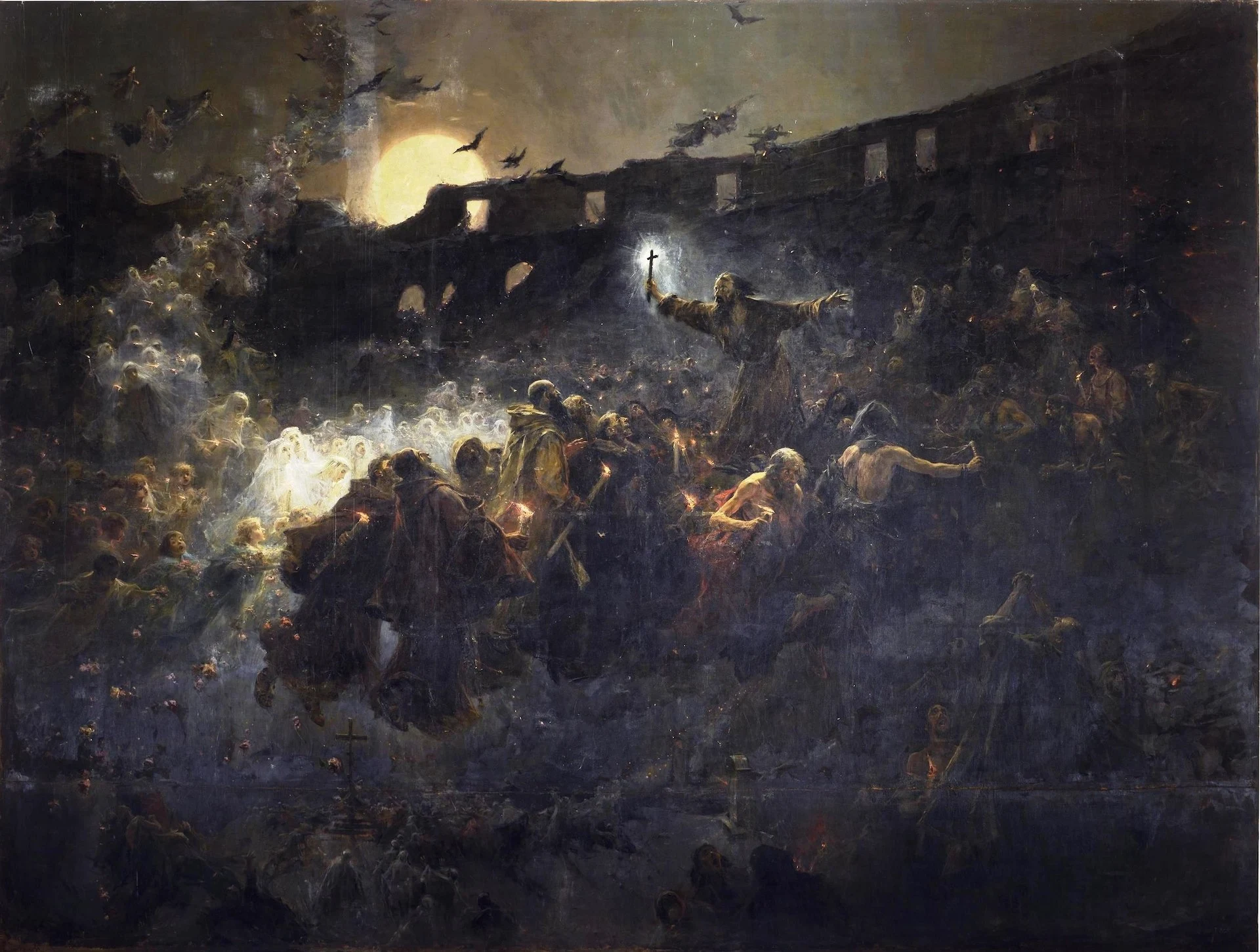
One of our main references is the Valencian painter José Benlliure Gil, who makes a spectacular use of chiaroscuro. We highlight from his work “The vision of the Colosseum”.
From Chiaroscuro Theory to Its Use in Cinema
Far from remaining a purely technical definition, chiaroscuro continues to be one of the foundations of cinematic language today. The way light and shadow shape atmospheres, guide the viewer’s eye, and convey meaning is essential in any contemporary audiovisual production. From this perspective, chiaroscuro becomes the creative principle that guides our work as a film production company in Spain focused on visual storytelling, where each project is developed with a coherent aesthetic and narrative intention, integrating direction, lighting, and mise-en-scène as a unified whole.
The origin of a cinematic story
EL CLAROSCURO FILMS · Film Production Company registered with the ICAA · No. 01F60258
(Institute of Cinematography and Audiovisual Arts of the Ministry of Culture)